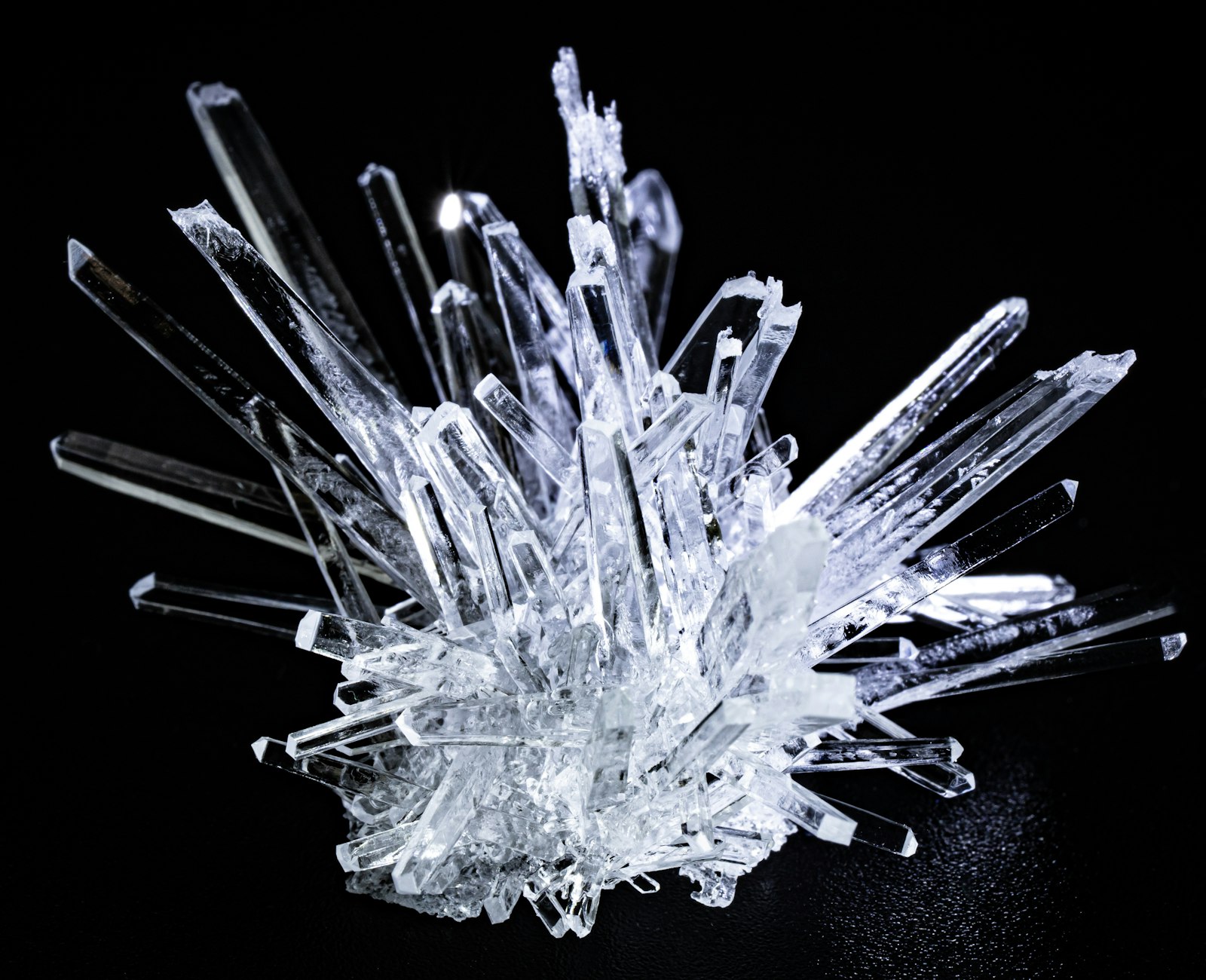
From melt to mirror.
An optical object is mostly patience. Three slow steps stand between raw glass and a piece that does something exact with light.
Annealing
Raw optical glass is heated and cooled along a precise curve over several days, releasing the internal stress left by casting. It is the slowest step and the one nobody sees , but it is why a piece stays true, and won't craze or cloud with age.
Cold-cut facets
Geometry is measured first, then cut cold, one face at a time. We design the angles for how light should move through the piece and cut to them exactly. The spark is a consequence of precision, never the goal of it.
Hand polish
Every edge is worked by hand through finer and finer grits until it disappears. What is left is not an edge but a line of light , the detail that separates an optical object from a paperweight.
Why optical glass, not crystal.
We work in optical K9 , the glass made for camera lenses, not for chandeliers. It transmits more light and scatters less of it, holds a finer polish, and keeps its clarity for decades. "Lead crystal" sparkles because it is impure; optical glass is chosen because it is not.
Every blank is lab-grown to a known refractive index, so two pieces of the same series behave identically in the same light.
Route the beam.
Every commission is proven on the bench before it ships. Try it: send the beam through all three prisms in order of ascending refractive index, and land it on the sensor.